Analysis baseline: approximately March 5, 2026. Events after this date are not reflected.
Chapter Index
| Chapter | Title |
| Prologue | What Happened on February 28, 2026 |
| Ch. 1 | The Path from Nuclear Talks to Military Action and the Structure of Justification |
| Ch. 2 | How Past Limited Retaliation Enabled the Decision to Assassinate the Supreme Leader |
| Ch. 3 | The 58-Day Force Redeployment from Venezuela to Iran |
| Ch. 4 | Post-Assassination Power Structure Revealed by Persian-Language Primary Sources |
| Ch. 5 | The Military Meaning of Five Simultaneous Kills and the Reality of Successor Placement |
| Ch. 6 | Six-Stage Evaluation of the Intelligence Process That Made the Assassination Possible |
| Ch. 7 | Quantifying Iran’s Remaining Military Capability by Region and Domain |
| Ch. 8 | Verifying Wartime Fiscal Sustainability from Iran’s Actual Government Budget Figures |
| Ch. 9 | Verifying All of Iran’s Access Routes Beyond Hormuz with Actual Data |
| Ch. 10 | The CIA’s Pre-Assessment and Five Scenarios for ‘After the Destruction’ |
| Epilogue | What This Attack Designed, What It Achieved, and What It Has Not |
Chapter 5: The Military Meaning of Five Simultaneous Kills and the Reality of Successor Placement
── ‘Vertical Command’ Was Replenished, but ‘Horizontal Integration’ Remains Broken
1. What Did the ‘Decapitation’ Actually Break? — Not ‘Vertical’ but ‘Horizontal’ Severance
As organised in the Prologue, five deaths were confirmed in the February 28, 2026 attack: Khamenei, Pakpour, Mousavi, Nasirzadeh, and Shamkhani [5-01][5-02]. IranWire described this as ‘near-complete decapitation’ [5-02]. However, ‘decapitation’ does not simply mean ‘the top is gone.’ The core issue is what functions were simultaneously lost.
Examined individually, each of the five carried a different function. Khamenei: final authority and legitimacy. Pakpour: IRGC operational command. Mousavi: integrated coordination between IRGC and regular military. Nasirzadeh: equipment procurement and modernization. Shamkhani: political-military nexus of national security. In peacetime, these five functions operate independently. But in wartime, unless these five are connected by a ‘horizontal bar,’ integrated military-political action is impossible.
IranWire’s assessment is precise on exactly this point. The essence of this ‘decapitation’ is not the loss of ‘vertical command’ but the severance of ‘horizontal integration’ [5-02]. The IRGC’s vertical chain of command was — as detailed below — replenished relatively quickly by a successor. However, operational coordination between regular military and IRGC (Mousavi’s function), procurement decisions (Nasirzadeh’s function), and the security-diplomacy nexus (Shamkhani’s function) cannot be substituted by a single successor. This produces a ‘two-story instability’ structure.
Table 5-1: ‘Two-Story Instability’ — Structural Decomposition of What the Decapitation Broke
| Story | Lost Person/Function | Replenishment Status | Structural Implication |
| 1st Floor: IRGC Internal Command Succession | IRGC Commander Pakpour → Vahidi | Vahidi promoted from Deputy Commander. Multiple media report his appointment [5-03][5-04][5-05] | Vertical chain of command replenished relatively quickly. The fact that the IRGC continues operational action (6th wave of attacks) confirms this [5-06]. However, ‘unity’ and ‘centripetal force’ are separate issues. |
| 2nd Floor: Integrated National Military Operations | Simultaneous loss of Chief of Staff Mousavi + Defence Minister Nasirzadeh + Security Hub Shamkhani | Operational coordination between regular military × IRGC, procurement decisions, and security-diplomacy nexus simultaneously severed | This layer’s loss cannot be substituted by a single successor. Directly connected not only to external warfare but to domestic security, sanctions-era economic management, and energy transport (Hormuz), amplifying geopolitical risk [5-02]. |
2. Pre-Positioning — Khamenei Had Prepared for ‘Post-Decapitation’
The reason the IRGC’s chain of command was replenished relatively quickly was no accident. Evidence exists that Khamenei himself institutionalized successor placement (pre-positioning) before the assassination.
According to PressTV reporting dated December 31, 2025, Khamenei appointed Ahmad Vahidi as IRGC Deputy Commander on that date, moving former Deputy Commander Ali Fadavi to ‘Head of the Commander’s Advisory Board’ [5-07]. This personnel action occurred approximately two months before the February 2026 decapitation.
Three points must be confirmed to read the implications. First, placing Vahidi as Deputy Commander itself amounts to near-designation of ‘the next Commander.’ In the IRGC, the Deputy Commander is the strongest promotion candidate when the Commander is absent. Khamenei placing Vahidi in this position was a succession design explicitly anticipating ‘if something happens to me’ [5-07].
Second, moving former Deputy Commander Fadavi to ‘Advisory Board Head’ is friction management within the organisation. Rather than dismissing the former deputy, transferring him to an honourific position preserves his dignity while effectively transferring authority. This was a safeguard to ‘prevent the chain of command from splitting due to internal backlash even if decapitated’ [5-07].
Third, the timing of this personnel action. December 2025 coincided with large-scale anti-government protests inside Iran. At a time when Khamenei strongly perceived regime survival risk, he clarified the IRGC command succession. This was ‘crisis management for regime defence’ and simultaneously ‘preparation for decapitation.’
3. Who Is Ahmad Vahidi? — A Career That Foretells ‘the Regime’s Direction’
Table 5-2: Ahmad Vahidi’s Career and the Implications of Each
| Career | Fact | What This Career Implies |
| IRGC Founding Member (1979–) | Involved in establishing the IRGC immediately after the Islamic Revolution. ‘First generation’ revolutionary fighter. | The person closest to the regime’s ‘origin,’ possessing the senior IRGC network. Organisational centripetal force is based not on ‘charisma’ but on ‘hierarchical relationships and network density’ [5-08]. |
| Quds Force Involvement (External Ops) | Involved in founding the Quds Force (IRGC external operations division), as organised by Nournews [5-08]. | Connections to the external proxy network (Hezbollah, Iraqi militias, etc.). An ‘outward-facing’ rather than ‘inward-facing’ figure, oriented toward continuation of external military action. |
| Defence Minister (2011-2013) | Served as Defence Minister under the Ahmadinejad administration. Oversaw equipment procurement and military modernization. | Experience at the political-military interface. A type who ‘can move both military and administration’ — the integrative coordinator profile demanded in crises [5-08]. |
| Interior Minister (2021-2025) | Served as Interior Minister under the Raisi administration. Oversaw domestic security, election management, administrative control. | Direct experience holding the levers of domestic suppression. A person who has experienced both ‘external operations + domestic security’ is rare, making this a career optimised for regime defence. |
| Interpol Red Notice (AMIA Bombing) | Red notice issued by Interpol for suspected involvement in the 1994 AMIA Jewish community centre bombing in Argentina. | The appointment of an individual internationally recognised as a ‘terrorism suspect’ as IRGC Commander shows the regime prioritised ‘internal cohesion’ over ‘international perception.’ A factor that hardens Iran’s posture as an external negotiation counterpart. |
Surveying Vahidi’s career, one direction becomes clear: this person foretells not ‘regime democratization’ but ‘regime militarization.’ Revolutionary legitimacy as an IRGC founding member, external operations experience through the Quds Force, levers of domestic suppression as Interior Minister, and international isolation through the Interpol red notice — all point toward ‘internal cohesion and external hardline’ rather than ‘reconciliation with the outside.’
As discussed in Chapter 2, the CIA’s leading pre-attack assessment was that ‘IRGC hardliners will succeed’ [5-09]. Vahidi’s appointment is the most concrete evidence that this scenario is materializing.
4. Fadavi’s Treatment — Pre-Positioning as a ‘Safety Valve’
Another critical element of pre-positioning is the treatment of former Deputy Commander Ali Fadavi. According to PressTV, Khamenei simultaneously appointed Vahidi as Deputy Commander and moved Fadavi to ‘Head of the Commander’s Advisory Board’ [5-07].
This personnel action appears minor but is extremely significant from an organisational dynamics perspective. Fadavi had served as IRGC Deputy Commander since 2016 and was also former commander of the IRGC Navy (IRGCN). ‘Dismissing’ such a person would sow seeds of division within the IRGC. The lateral transfer to ‘Advisory Board Head’ executes de facto authority removal while preserving dignity — functioning as a ‘safety valve’ that absorbs internal backlash [5-07].
Khamenei had designed not only Vahidi’s promotion but also the management of organisational friction accompanying that promotion. The institutional arrangements to ‘prevent the IRGC from splitting even if decapitated’ were completed two months before the assassination.
5. Did the IRGC Stop? — The ‘6th Wave Attack’ Demonstrates Surviving Command
Whether pre-positioning functioned can be verified from the IRGC’s post-decapitation actions. Al Jazeera organised that the IRGC conducted a ‘6th wave of missile and drone attacks’ even after decapitation [5-06]. This indicates the command system was not completely paralysed. Had Pakpour’s death completely severed IRGC command, systematic multi-wave attacks would have been impossible.
However, ‘not stopping’ and ‘quality maintained’ are separate issues. As detailed in Chapter 7, the IRGC’s missile launch rate declined daily, and according to FDD analysis, ballistic missile launches dropped -86% from Day 1 [5-10]. This decline suggests not ‘inventory depletion’ but ‘launch capability (TEL = mobile launchers, C2 = command and control) degradation.’
The IRGC command system ‘continued,’ but the sudden loss of the upper layer degraded ‘retaliation quality (coordination/control).’ As Al Jazeera’s analysis notes, the IRGC is held together by ‘ideology (loyalty to the Supreme Leader) and vested interests (economic network),’ and leadership change can strengthen ‘militarization’ over ‘democratization’ [5-11]. Vahidi’s career (previous section) perfectly aligns with this structural prediction.
6. The ‘Vahidi + Larijani’ Dual Pillar — The Interim Regime’s De Facto Power Structure
Table 5-3: The Interim Regime’s ‘Dual Pillar’ Structure — Vahidi (Military) × Larijani (Political/Security)
| Domain | Vahidi (IRGC Commander) | Larijani (SNSC Secretary-General) |
| Operational Command | Commands IRGC missiles, drones, ground forces, Quds Force [5-03] | No operational command authority. But may be involved in political approval processes for operations [5-12] |
| External Security | External network through Quds Force experience [5-08] | Coordination of nuclear negotiations and regional diplomacy. De facto external negotiation hub in Khamenei’s absence [5-12] |
| Domestic Security | Physical suppression capability through Basij and IRGC ground forces [5-11] | Security policy coordination through SNSC. Personally issued separatism warnings [5-12] |
| Source of Legitimacy | Appointment by Supreme Leader (Dec 2025 deputy appointment) [5-07] | ‘Coordinating power’ from explaining procedures from outside the interim council [5-12] |
| Potential Conflict Point | Risk of IRGC internal backlash: ‘why is a non-military person running the security centre?’ | Opacity of whether IRGC is subordinate to or parallel with the council. Scenario where Larijani’s coordination is rejected by IRGC |
This dual pillar structure is the most consistent power model of the interim regime from reporting [5-12]. Vahidi operates the ‘hard power apparatus,’ Larijani handles ‘political/security coordination,’ and the interim council supplies legitimacy as the ‘constitutional face.’ However, this structure has one essential vulnerability: Vahidi’s authority derives from ‘Khamenei’s appointment,’ and with Khamenei now dead, that appointment’s legitimacy decays over time. Until a formal successor Supreme Leader is elected, Vahidi’s authority depends on ‘fait accompli’ rather than ‘institution.’
7. The ‘Decapitation’ Did Not Target Only the IRGC — Seven Attack Priority Domains
Sections 1-6 focused on IRGC succession and surviving command. But that is only one facet of the ‘decapitation.’ Integrating ISW/CTP battle reports, the attack was designed as ‘multi-front simultaneous destruction’ across seven domains [5-15]. The IRGC command system is just one of those seven.
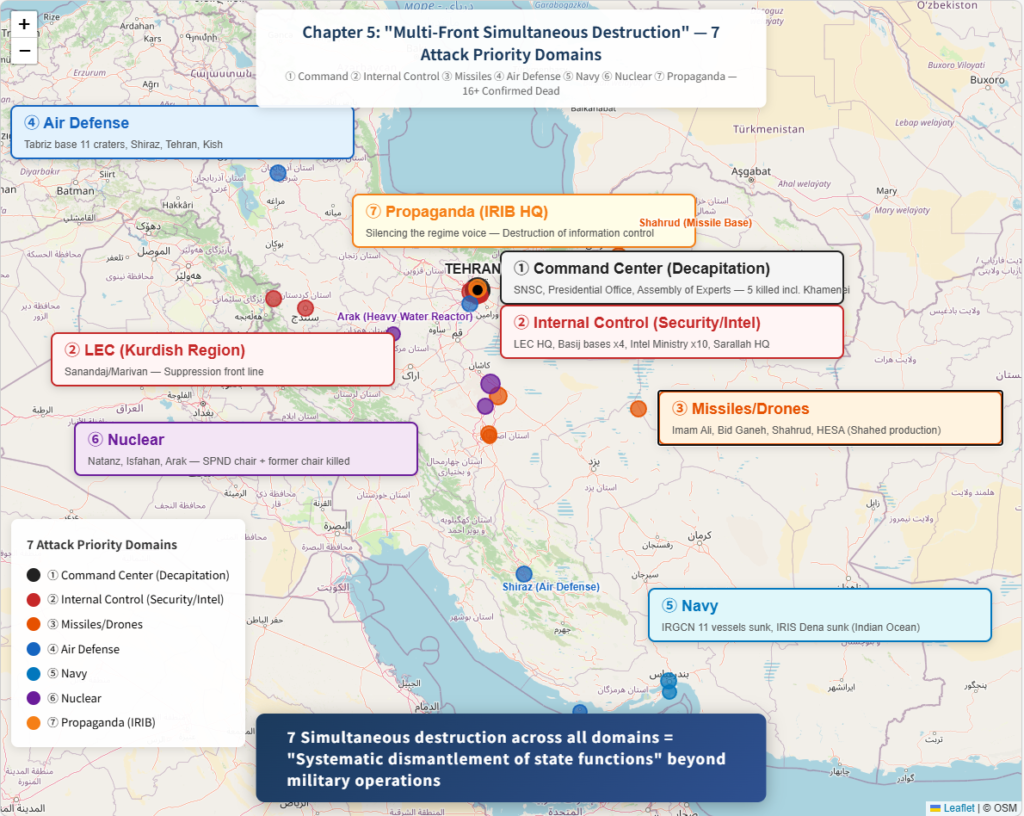
Figure 5-1: Nationwide Distribution of the Seven Attack Priority Domains
Source: Author. Map tiles: © OpenStreetMap contributors (ODbL). Attack target data: CTP-ISW Iran Update 2/28–3/2, USNI News, CBS News, BBC, Air & Space Forces Magazine. Casualty data: Al Jazeera, IranWire, Reuters. Nuclear facility locations: Iran Watch / IAEA.
Table 5-A: Seven Attack Priority Domains — The Full Picture of ‘Multi-Front Simultaneous Destruction’
| # | Attack Domain | Targets Reported by ISW/CTP | Structural Implication |
| ① | Command Centre Decapitation (the nation’s brain) | Simultaneous killing of Khamenei + Chief of Staff + Defence Minister + Security Hub. SNSC, Presidential Palace, Assembly of Experts facilities attacked on 3/3 [5-16]. | Decision-making paralysis. Vacuum of ‘who gives orders.’ Detailed in Sections 1-6. |
| ② | Internal Control (security/intelligence) | ‘Internal security sites responsible for maintaining security, suppressing protests’ targeted [5-15]. LEC HQ, Basij bases, 10 MOIS command centres, LEC Intelligence Organisation HQ [5-15][5-16]. | Systematic destruction of infrastructure of ‘multi-layer package’ (Ch. 4 Table 4-B) that suppressed January protests. Cannot replicate same suppression when protests rekindle. |
| ③ | Missiles/Drones (retaliation capability) | Ballistic missile bases (Imam Ali, Bid Ganeh etc.), drone manufacturing (HESA), defence industry targeted [5-15]. | Detailed in Ch. 7. Launch capability 25% (gap with inventory 60% demonstrates TEL/C2 destruction effect). |
| ④ | Air Defence Network (the sky’s umbrella) | ‘200+ air defences targeted’ since 2/28, ‘local air superiority established’ [5-15]. | Detailed in Ch. 7. Air defence survival 20%. ‘Sky umbrella’ stripped enabling low-risk continued operations. |
| ⑤ | Navy (the Hormuz threat) | IRGC Navy vessels and drone carriers. CENTCOM announced 11 vessels sunk [5-15]. | Detailed in Ch. 7. Naval open-water 15%. Degradation of Hormuz blockade capability. |
| ⑥ | Nuclear-Related | Natanz attacked on 3/2. Pasdaran district defence industry/nuclear facilities [5-15]. SPND Chairman + former Chairman confirmed killed [5-17]. | Second nuclear facility strike following June 2025 Midnight Hammer. |
| ⑦ | Propaganda Centre (IRIB) | IRIB (state broadcasting) HQ attacked in Tehran [5-15]. | ‘Silencing the regime’s voice.’ Degrades the ‘fear stageing’ and ‘official narrative unification’ capability during protests. |
The simultaneous destruction across these seven domains means the attack was designed not merely as a ‘military operation’ but as ‘systematic dismantlement of national functions.’ Destroying IRGC retaliation capability alone would require only ①③④⑤. Simultaneously hitting ② (security apparatus) and ⑦ (propaganda) reflects a design to ‘weaken not only militarily but also the capacity to govern domestically’ — directly connected to the ‘autonomous regime change’ conditions discussed in Chapter 2.
8. Five-Function Attrition Assessment of Suppression Capability — ‘Can the Next Unrest Be Contained?’
Table 5-B: Five-Function Attrition Assessment of Suppression Capability — ‘Can the Same Suppression Be Replicated?’
| Function | Attack Damage | Degradation Level | Structural Implication |
| A. Supreme Decision-Making (command unification) | Khamenei dead. Interim 3-person council cannot replicate Khamenei’s concentrated authority. SNSC/Presidential Palace/Assembly facilities attacked [5-16]. | HIGH DEGRADATION | Vacuum in the function that gives final unified authorization for suppression (live fire, mass detention). Council consensus formation is slow and susceptible to splits. |
| B. Suppression C2 (nationwide control core) | Sarallah HQ attacked on 3/1 [5-18]. Sarallah is the ‘core’ of nationwide suppression control. Kurdish region LEC HQ (Sanandaj, Marivan) also destroyed [5-16]. | HIGH DEGRADATION | Degraded capability for ‘reinforcement command/coordination against simultaneous nationwide incidents.’ Area suppression becomes difficult in protest-prone provinces where county-level command posts have fallen. |
| C. Frontline Operatives (LEC/Basij) | Multiple Basij positions + LEC facilities attacked in Tehran [5-15]. Capital’s ‘rapid response’ and ‘intimidation hubs’ diminished. | MODERATE DEGRADATION (depth in area remains) | Central hubs struck but Basij/police are ‘broad in personnel and positions across the area’ so periphery survives. However, C2 degradation in capital and key points is heavy. |
| D. Intelligence/Arrest (pre-emptive detection/fear governance) | MOIS senior officials (Hamidi, Pour Hossein) killed [5-18]. Police Intelligence Commander Rezaian confirmed dead [5-17]. LEC Intelligence Organisation HQ destroyed [5-16]. 10 MOIS command centres targeted [5-15]. | HIGH DEGRADATION | Nodes in the ‘pre-emptive detection → detention → confession → publicity’ pipeline on the intelligence side have fallen. ‘Pulling shoots of rekindling’ capability significantly degraded. |
| E. Propaganda + Communications Shutdown | IRIB HQ attacked [5-15]. However, internet shutdown is maintained [5-15]. | PARTIAL DEGRADATION (shutdown remains) | ‘Regime’s voice’ is damaged but as long as internet shutdown is maintained, nationwide ‘synchronization’ of protests remains difficult. Economic cost of shutdown creates separate fissures. |
This five-function attrition assessment shows that the capability to area-suppress ‘simultaneous nationwide large-scale protests’ at the same speed and scale as last time has clearly degraded. Command (A/B) and intelligence (D) show ‘high degradation’ while frontline operatives (C) have ‘area depth remaining’ — meaning ‘the centre that issues orders’ is broken but ‘the periphery that executes orders’ survives. This structure means that if protests rise nationally before the centre is rebuilt, the periphery begins to question ‘whose orders to follow’ — creating the trigger for defection.
9. Confirmed Deaths Beyond the ‘Five’ — Organisational Destruction of Security/Intelligence
The ‘simultaneous killing of five’ presented in the Prologue is the symbol of decapitation, but the human network destroyed by the attack far exceeds five. Additional confirmed deaths from Wikipedia’s ‘death list’ [5-17] and ISW/CTP battle reports [5-15][5-16][5-18] include figures spanning nuclear/missile, security/intelligence, and joint staff domains.
Table 5-C: Confirmed Deaths Beyond the ‘Five’ — Organisational Loss Across Security/Intelligence/Nuclear
| Name | Position | Structural Implication of Loss |
| Mohammad Shirazi | Supreme Leader’s Military Office Chief [5-17] | The ‘direct circuit’ between Khamenei and the military. This loss means the channel for a successor Supreme Leader to transmit orders to the military is severed. |
| Hossein Jabal Amelian | SPND Chairman (Defence Innovation Research Org) [5-17] | Current head of nuclear weapons-related research. The practical driver of nuclear acceleration scenarios is gone. |
| Reza Mozaffari Nia | Former SPND Chairman [5-17] | Predecessor of above. Loss of SPND’s organisational memory. |
| Mohsen Darrebaghi | Joint Staff Organisation: Logistics/Support Deputy [5-17] | Strike to the joint staff’s logistics function. The person carrying the ‘supply line’ for military rebuilding. |
| Bahram Hosseini Motlagh | Joint Staff Organisation: Operations Planning [5-17] | Strike to the joint staff’s operational planning capability. The person who practically runs ‘horizontal integration.’ |
| Gholamreza Rezaian | Police Intelligence Organisation Commander [5-17] | The core of domestic dissident surveillance/detection. Direct hit on Ch. 4 Table 4-C ‘intelligence/arrest’ function. |
| Mohammad Baseri | MOIS Senior Official [5-17] | Degradation of MOIS (Intelligence Ministry) organisational capability. |
| Saleh Asadi | Khatam al-Anbiya Central HQ: Intelligence Chief [5-17] | Intelligence function of wartime operations command. Nexus of military operations and intelligence activities. |
| Yahya Hamidi | Intelligence Ministry: Deputy for Counter-Israel [5-18] | Core of counter-Israel intelligence warfare. IAF confirmed the kill. |
| Jalal Pour Hossein | Intelligence Ministry: Spy Division Chief [5-18] | Core of counterintelligence and internal surveillance. Defection monitoring capability degraded. |
| Reza Khazai | IRGC Quds Force Lebanon Corps Chief of Staff [5-16] | Hezbollah rearmament coordination role. Strike to external proxy network. |
Adding these 11 additional confirmed deaths to the Prologue’s five brings the total to at least 16 confirmed dead. Moreover, their composition spans not only ‘military commanders’ but security, intelligence, nuclear, logistics, operations planning, and proxy liaison — the ‘human network’ of Iran’s national functions has been systematically destroyed. The ‘five’ in the ‘decapitation’ is symbolic; the reality is ‘organised elimination of 16+,’ meaning not just ‘the top was killed’ but ‘nodal points of national functions were destroyed across an area.’
10. Determining ‘Sufficient Conditions for Revolution’ — Three Thresholds
Did this attack satisfy the ‘sufficient conditions’ for regime change? Assessed from open sources: the attack contains elements of a design ‘aimed at’ regime change, but it alone is not a standalone sufficient condition that makes revolution certain [5-16]. Whether revolution occurs depends on at least the following three thresholds aligning:
Table 5-D: Three Thresholds for Revolution — Current Level of Attainment
| # | Threshold | Current Status | Assessment |
| ① | Scale and simultaneity of protests (rising nationwide simultaneously) | Nationwide protests occurred Dec 2025–Jan 2026 but were suppressed. Post-attack rekindling unconfirmed (under communications blackout). | NOT REACHED. However, ‘residual heat of anger’ remains (Ch. 2). Synchronized rekindling possible if communications blackout lifts. |
| ② | Loss of security-side control (command split, troop disobedience) | Suppression C2 (Sarallah HQ, LEC HQ) and intelligence (MOIS, police intel) systematically struck. However, no confirmed defections at Basij/police periphery. | PARTIALLY APPROACHING. Centre is broken but periphery survives. The ‘trigger’ for defection has been created but the ‘fact’ has not yet occurred. |
| ③ | Continued strikes on additional ‘suppression nodes’ (denying time to rebuild) | Attacks ongoing (campaign type). ISW/CTP reports new targets daily. Re-strikes possible before replacement command posts stand up. | IN PROGRESS. US continued strikes are approaching this condition, but a ceasefire would allow rebuilding to begin. |
Of the three thresholds, ① is not reached, ② is partially approaching, ③ is in progress. The ‘sufficient conditions for revolution’ are not currently met, but ‘a substantial portion of the necessary conditions’ have been established. Whether the ‘autonomous regime change’ discussed in Chapter 2 materialises depends on ① (scale of protest rekindling) and ② (security-side defection) — variables the US cannot directly control. The core uncertainty of the ‘break and delegate’ design lies here.
11. What the Decapitation Broke and What It Could Not Break
The ‘decapitation’ of February 28, 2026, inflicted two different levels of damage on Iran’s national structure.
The first level (1st floor) is IRGC command succession. This was replenished relatively quickly through pre-positioning that Khamenei himself had designed two months before the assassination — Vahidi’s appointment as IRGC Deputy Commander and Fadavi’s lateral transfer to the IRGC Advisory Board. The fact that the IRGC conducted multi-wave attacks after decapitation confirms this.
The second level (2nd floor) is integrated national military operations. The simultaneous loss of Chief of Staff Mousavi, Defence Minister Nasirzadeh, and Security Hub Shamkhani severed the ‘horizontal bar (integrated coordination)’ across regular military × IRGC × government. This layer’s loss cannot be substituted by a single successor and is the structural background to the emergence of SNSC Larijani’s ‘coordinating power’ discussed in Chapter 4.
And successor Vahidi’s career — IRGC founding member, Quds Force involvement, former Defence Minister and Interior Minister, Interpol red notice — is the most concrete evidence that post-decapitation Iran is moving toward ‘militarization’ rather than ‘democratization.’ The CIA’s favoured ‘IRGC hardliner succession’ scenario has, with Vahidi’s appointment, moved from prediction to near-observed fact.
However, the most important finding is the very existence of pre-positioning. Khamenei had anticipated the possibility of being killed and pre-institutionalized personnel arrangements for the regime to continue afterward. This is evidence of ‘regime vulnerability’ and simultaneously evidence of ‘regime design capability.’ The decapitation destroyed the apex of the state, but the regime — at least in its initial response — operated as designed.
Chapter 6 examines the intelligence process itself that made this ‘decapitation’ possible. The operation from CIA’s months-long tracking to the killing of Khamenei is scored through the six-stage engineering framework of Find → Fix → Fuse → Isolate → Finish → Exploit.
Chapter 5 — References
[5-01] Al Jazeera, “Who Are Iran’s Senior Figures Killed in US-Israeli Attacks,” aljazeera.com (5 dead, Vahidi successor mention) [Link]
[5-02] IranWire, “Iran Confirms Deaths of Top Military Leaders in US-Israeli Strikes,” iranwire.com (‘near-complete decapitation,’ integrated coordination severance) [Link]
[5-03] Iran International, “Ahmad Vahidi Appointed IRGC Commander,” iranintl.com (state media report of Vahidi appointment) [Link]
[5-04] Al Jazeera, “US-Israel Attacks on Iran Day 2,” aljazeera.com (Hamshahri paper reports Vahidi appointment) [Link]
[5-05] Israel Hayom, “Ahmad Vahidi Appointed IRGC Commander,” israelhayom.com (detailed Vahidi profile) [Link]
[5-06] Al Jazeera, ibid. [5-04] (IRGC conducts 6th wave of attacks, command continuity) [Link]
[5-07] PressTV, “General Ahmad Vahidi Appointed Deputy Commander of IRGC,” presstv.ir, 2025/12/31 (Khamenei’s Vahidi deputy appointment, Fadavi advisory board transfer = pre-positioning) [Link]
[5-08] Nournews, “Strategic Shake-up in IRGC: Who Is New IRGC Deputy Chief,” nournews.ir (Vahidi career: Quds Force founding, Defence/Interior Minister, integrative coordinator profile) [Link]
[5-09] Reuters, “Prior to Iran Attacks, CIA Assessed Khamenei Would Be Replaced by Hardline IRGC,” reuters.com [Link]
[5-10] FDD, “Why Iran’s Ballistic Missile Launches Are Declining,” fdd.org, 2026/03/04 (ballistic missile launches -86%, ~300 launchers neutralised) [Link]
[5-11] Al Jazeera, “Has Trump Misunderstood Iran’s IRGC and the Basij Forces,” aljazeera.com (IRGC ideology + vested interest structure, leadership change → militarization) [Link]
[5-12] Reuters, “In Khamenei’s Absence, Pragmatist Larijani Emerges as Power Broker in Iran,” reuters.com (Larijani = power broker, dual pillar suggestion) [Link]
[5-13] CGTN, “Ahmad Vahidi Named as IRGC Commander,” news.cgtn.com (third-source confirmation of Vahidi appointment)
[5-14] Reuters, “Iran Defence Minister, Guards Commander Killed,” reuters.com (Nasirzadeh/Pakpour death confirmation, 3-source basis) [Link]
[5-15] ISW/CTP, Iran Update Evening Special Report, March 2, 2026 (‘internal security sites,’ 7 domains, 10 MOIS centres, IRIB HQ, 200+ air defences targeted) [Link]
[5-16] ISW/CTP, Iran Update Morning Special Report, March 3, 2026 (SNSC/Presidential/Assembly attacks, LEC Intel HQ, Kurdish LEC HQ, Reza Khazai killed) [Link]
[5-17] Wikipedia, “List of Iranian Officials Killed During the 2026 Iran Conflict” (confirmed death list: Shirazi, Jabal Amelian, Mozaffari Nia, Darrebaghi, Hosseini Motlagh, Rezaian, Baseri, Asadi) [Link]
[5-18] ISW/CTP, Iran Update Morning Special Report, March 2, 2026 (Sarallah HQ attack, MOIS officials Hamidi/Pour Hossein killed) [Link]
Leave a Reply