
Analysis baseline: approximately March 5, 2026. Events after this date are not reflected.
Chapter Index
| Chapter | Title |
| Prologue | What Happened on February 28, 2026 |
| Ch. 1 | The Path from Nuclear Talks to Military Action and the Structure of Justification |
| Ch. 2 | How Past Limited Retaliation Enabled the Decision to Assassinate the Supreme Leader |
| Ch. 3 | The 58-Day Force Redeployment from Venezuela to Iran |
| Ch. 4 | Post-Assassination Power Structure Revealed by Persian-Language Primary Sources |
| Ch. 5 | The Military Meaning of Five Simultaneous Kills and the Reality of Successor Placement |
| Ch. 6 | Six-Stage Evaluation of the Intelligence Process That Made the Assassination Possible |
| Ch. 7 | Quantifying Iran’s Remaining Military Capability by Region and Domain |
| Ch. 8 | Verifying Wartime Fiscal Sustainability from Iran’s Actual Government Budget Figures |
| Ch. 9 | Verifying All of Iran’s Access Routes Beyond Hormuz with Actual Data |
| Ch. 10 | The CIA’s Pre-Assessment and Five Scenarios for ‘After the Destruction’ |
| Epilogue | What This Attack Designed, What It Achieved, and What It Has Not |
Chapter 7: Quantifying Iran’s Remaining Military Capability by Region and Domain
── An Engineering Reconstruction of Iran’s Military Capability
1. ‘Severely Degraded’ Is Not Analysis — The Need to Speak in Numbers
‘Iran’s air defence has been severely degraded’ — this phrase was repeated across global media within days of the attack’s start. UPI wrote ‘severely degraded’ [7-01], and ISW/CTP analysed that ‘local air superiority’ had been achieved [7-02]. But what does ‘severely degraded’ mean in specific percentages? Which regional commands were destroyed and which survived? Did missile ‘inventory’ or ‘launch capability’ decline more?
This chapter reconstructs Iran’s remaining military capability across three layers. First, deconstructing PADAJA (Iranian Air Defence Force) regional command structure and scoring a ‘health index’ for each region. Second, creating a base-by-base ledger of IRGC-ASF (Aerospace Force) ballistic missile facilities. Third, evaluating remaining force by domain (missiles/UAV/air defence/navy/C2/air force) with point estimates and ranges. All figures are presented as ‘the lower bound of what can be confirmed (Minimum).’
2. PADAJA Regional Command Structure — Understanding the Air Defence ‘Boxes’
Iran’s air defence is geographically divided into 9 regional commands (SOC = Sector Operations Centre) under the Khatam al-Anbiya Air Defence Command (PADAJA). Each region manages brigade-equivalent air defence groups and radar sites [7-03]. Without understanding this regional structure, one cannot discuss ‘what was broken where.’
Table 7-1: PADAJA 9 Regional Command Structure
| Region | HQ | Coverage and Notes |
| Northern | Tehran | Tehran, Alborz, Mazandaran. Core of capital air defence. Direct protection of political/military centres. |
| Central | Isfahan | Isfahan, Qom, Markazi. Primary mission: nuclear facility protection (Natanz, Fordow). Most intensively attacked region in June 2025. |
| Northwest | Tabriz | E/W Azerbaijan, Ardabil, Zanjan. Turkey/Azerbaijan front. Includes Amand BM base defence. |
| Western | Hamedan | Hamedan, Kermanshah, Ilam, Lorestan. Iraq front. Bakhtaran underground missile base defence. Intensive attack in Feb 2026. |
| Southwest | (Unknown) | Khuzestan etc. Oil infrastructure zone. No air-defence-specific damage confirmed in this study. |
| Southern | Bandar Bushehr | Bushehr, Shiraz. Kharg Island oil loading defence. Electronic facility (radar manufacturing) attack confirmed. |
| Southeast | Bandar Abbas | Hormozgan etc. Direct Hormuz Strait defence. Kish Island radar attack confirmed. |
| Eastern | Birjand | South Khorasan etc. Deep interior. Zahedan mobile radar destruction confirmed in March 2026. |
| Northeast | Mashhad | Razavi Khorasan etc. Mashhad base-related strikes confirmed in June 2025. |
3. Health Index Scoring Methodology
To quantify ‘air defence is broken,’ we need ‘weights’ for what was destroyed. Destruction of an S-300-class long-range SAM site has a different impact on the overall air defence system than the loss of a single mobile radar. This study adopted the following weighting rules, hypothetically assigning 100 points of ‘health’ to each region and deducting the weight of confirmed strikes.
Table 7-2: Air Defence Health Scoring Weight Rules
| Type of Damage | Points | Basis for Points |
| Long-range SAM site/battery (S-300, SA-65 class) | 20 | Backbone of IADS. Loss of one directly impacts entire region’s engagement capability. |
| Early warning radar / critical radar site | 12 | Loss of ‘seeing’ capability. Shrinking detection range pushes intercept preparation time toward zero. |
| Mobile radar destruction | 10 | Relocatable, but confirmed destruction establishes ‘a hole at that moment.’ |
| Air defence group (e.g., Fordow AD Group) strike | 10 | ‘Bundling’ of regional defence is broken. Broader impact than individual site loss. |
| Tactical air base (aviation contributing to air defence) | 6 | Ground destruction of interceptors degrades ‘ability to reclaim the sky’ in that region. |
| ‘Air defence supply source’ (electronics/radar manufacturing) | 6 | Impact on medium-to-long-term rebuilding capability. |
| ‘Multiple in Tehran’ type unspecified large-scale mention | 15 (batch) | Specific names absent but quantity stated as ‘multiple.’ Conservative scoring. |
Formula: Each region is assigned a Share (air defence importance allocation) and Kinfra (infrastructure correction coefficient). Damage% is calculated from the total weight of confirmed strikes. Health% = 100 – Damage%. Damage% is the ‘lower bound of confirmed damage’; unconfirmed damage is excluded. Thus Health% is an upper limit, not the true health — ‘certainly no healthier than this.’
4. Regional Health Index — June 2025 vs Late February 2026
The following table scores confirmed strikes at two time points: June 2025 (Operation Midnight Hammer) and late February 2026 (Operation Epic Fury). ‘Min’ counts only strikes with specific names/locations identified; ‘Claim’ adds IDF/CENTCOM claim-based figures (’11 systems in the west’ etc.) [7-02][7-04][7-05].
Table 7-3: PADAJA Regional Health Index (June 2025 vs Late February 2026)
| Region (HQ) | Share | Jun 2025 Dmg% | Jun 2025 Hlth% | Feb 2026 Dmg% | Feb 2026 Hlth% | Key Strike Evidence |
| Northern (Tehran) | 18 | 12-31% | 69-88% | 0-12% | 88-100% | Jun 2025: ‘Multiple air defences in Tehran’ (type unspecified) [7-04]. Feb 2026: No additional specific names (may be included in nationwide 200+) |
| Central (Isfahan) | 18 | 40-59% | 41-60% | 0% | 100% | Jun 2025: Fordow SAMs, Khondab AD Group, S-300 sites [7-05]. Most intensively attacked. Feb 2026: No additional specific names |
| Northwest (Tabriz) | 8 | 33% | 68% | 10% | 90% | Jun 2025: SA-6 storage base, IRGC radar [7-04]. Feb 2026: Interceptor ground destruction (F-4/F-5) [7-06] |
| Western (Hamedan) | 10 | 26-41% | 59-74% | 25-100% | 0-75% | Jun 2025: Early warning radar, AH-1 destruction [7-04]. Feb 2026: SA-65 attack + ’11 western systems’ mention [7-07] |
| Southwest | 8 | 0% | 100% | 0% | 100% | No air-defence-specific damage confirmed in either period |
| Southern (Bushehr) | 10 | 7% | 93% | 0% | 100% | Jun 2025: Shiraz electronic facility (radar manufacturing) [7-05]. Feb 2026: Reaper flights suggest degradation but destruction unconfirmed |
| Southeast (B.Abbas) | 16 | 0% | 100% | 15% | 85% | Feb 2026: Kish Island radar attack [7-07]. Direct damage to Hormuz defence |
| Eastern (Birjand) | 6 | 0% | 100% | 20% | 80% | Mar 2026: Zahedan mobile radar destruction [7-06] |
| Northeast (Mashhad) | 6 | 13% | 87% | 0% | 100% | Jun 2025: Mashhad base-related strikes, KC-707 destruction [7-05] |
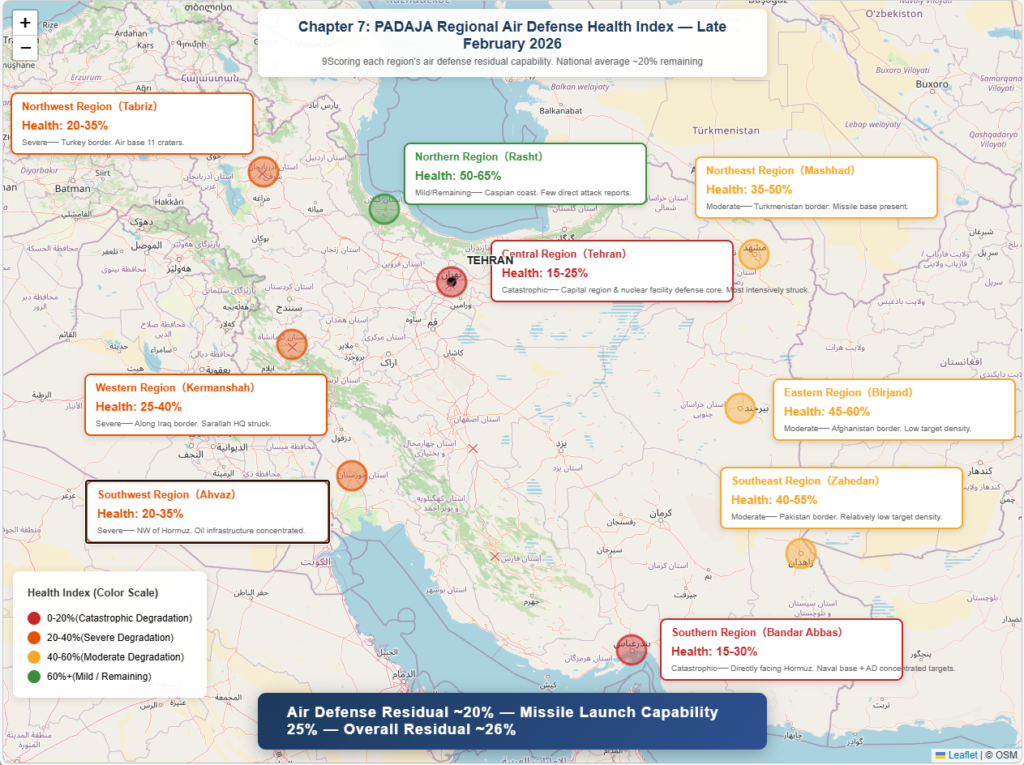
Figure 7-1: PADAJA Regional Air Defence Health Index (Late February 2026)
Source: Author. Map tiles: © OpenStreetMap contributors (ODbL). Regional structure: Iran Watch, CSIS Missile Threat. Attack data: CTP-ISW Iran Update 2/28–3/2, USNI News, CBS News. Base damage: Air & Space Forces Magazine (Tabriz 11 craters). Health scores are author estimates.
Two structural insights emerge. First, June 2025 attacks concentrated on nuclear facility defence (Central region), while late February 2026 attacks shifted focus to ballistic missile base defence (Western region). Target selection changed. Second, of the nationwide ‘200+ air defence targets,’ only a fraction can be attributed to specific regions by name, meaning actual air defence degradation is likely considerably greater than the Minimum shown in this table.
5. ‘Pre-War Baseline → Post-Attack’ Across All Equipment Domains
The regional health index (Section 4) was air-defence-specific. To assess the success of the attack design ‘weakening the regime beyond recovery’ (Chapter 2), all domains — ballistic missiles, drones, air defence, air force, navy, EW/cyber — must be comprehensively examined. The following subsections compare original source specifications with post-attack open-source reports.
5-1. Ballistic/Cruise Missiles — The Reality of the ‘Inventory’ vs ‘Launch Capability’ Gap
Table 7-A: Ballistic/Cruise Missile Key Equipment Specifications
| Equipment | Type | Range | Warhead | CEP | Est. Inventory | Notes |
| Shahab-3 | MRBM (liquid) | 1,300km | 750-1,000kg | ~3km | Hundreds | North Korean tech base. IRGC-ASF mainstay. Liquid fuel = long launch prep. |
| Ghadr | MRBM (improved) | 1,950km | ~750kg | 300m | Hundreds | Shahab-3 range extension. Significantly improved accuracy. |
| Emad | MRBM (improved) | 1,700km | ~750kg | <500m | Hundreds | Manoeuvring reentry vehicle with control fins. Precision guidance. |
| Khorramshahr | MRBM (liquid) | 2,000-3,000km | 750-1,500kg | 30m | Dozens | NK Musudan tech base. Highest accuracy liquid-fuel MRBM. |
| Sejjil | MRBM (solid) | 2,000km | ~750kg | Unknown | Dozens | Solid fuel = short launch prep. High TEL mobility. |
| Fattah-1 | Hypersonic MRBM | 1,400km | Unknown | Unknown | Few | Unveiled 2023. Aims to defeat missile defence. Limited deployment. |
| Zolfaghar | SRBM (solid) | 700km | 450-600kg | 10-30m | Hundreds | Short-range precision strike. For regional targets (US bases etc.). |
| Paveh | LACM | 1,650km | Unknown | Unknown | Dozens | Deployed post-2023. Low-altitude flight for air defence evasion. |
| Hoveizeh | LACM | 1,350km | Unknown | Unknown | Dozens | Long-range cruise missile alongside Paveh. |
Table 7-B: Ballistic Missile Inventory and Launcher Quantities — Basis for ‘Inventory 60%, Launch Capability 25%’
| Period | BM Total | TELs (Mobile Launchers) | Source / Implication |
| 2022 (Baseline) | 3,000+ | Several hundred | CENTCOM Gen. McKenzie estimate [7-18]. Iran Watch compilation. |
| Jun 2025 (Pre-MH) | 2,500 | 480 | IDF/Alma Research estimate [7-19]. Some attrition from Midnight Hammer. |
| Feb 2026 (Pre-EF) | ~2,500 (partial recovery) | ~200 (post-MH recovery) | TELs lost ~280 in MH, partially rebuilt (480→200). Inventory largely preserved in underground bases. |
| Mar 2026 (Post-EF) | 1,000-1,200 | ~100 | ISW/IDF estimate [7-20]. Inventory ~48-52% remaining (≈lower bound of 60%). TELs 480→100 = ~79% lost. ‘Inventory exists but cannot be fired.’ |
Underground bases (‘missile cities’) are built at depths of 500m in mountain terrain, estimated to be beyond the reach of B-2 GBU-57 penetrating munitions [7-21]. The 60% inventory survival is due to this underground protection. However, to ‘fire’ the inventory, TELs must emerge and deploy on the surface — and 79% of those TELs have been lost. ‘Having but unable to fire’ — this gap is the most important structure quantified in this chapter.
5-2. Drones — Production Capacity and Survival of ‘Cheap Saturation Attacks’
Table 7-C: Drone Key Equipment Specs and Production Capacity
| Equipment | Type | Range | Warhead | Production / Notes |
| Shahed-136 | Loitering munition | 2,000km+ | 30-50kg | Annual production: thousands (Iran domestic). Unit cost est. $35,000. Russia also producing ~10,000/yr [7-22]. Intercept cost $1-3M per round — ‘exponential cost asymmetry’ imposes excessive burden on defenders [7-23]. |
| Shahed-131 | Small loitering munition | 700-900km | Unknown | Annual production: hundreds. Smaller version of Shahed-136. |
| Shahed-238 | Jet-engine loitering munition | Unknown | Unknown | Development started 2023. Aims to defeat intercept through speed. Limited deployment. |
| Mohajer-6 | ISR/attack drone | 400km | 40kg | Continuous production. Combined ISR and precision attack operations. |
| Ababil-3/4/5 | ISR/attack drone | 200-300km | 40kg | Continuous production. Also supplied to proxies (Hezbollah, Houthis). |
Post-attack drone survival is harder to quantify than missiles. ISW/CTP reports OWA drone launches dropped -73% at 103 hours [7-24]. However, drones’ key feature is rapid production speed. If the annual production capacity of thousands for Shahed-136 is intact, consumption is replenished in the short term. Therefore, permanently degrading drone forces requires destruction of manufacturing facilities (HESA etc.). ISW/CTP reports ‘HESA (drone manufacturing)’ is on the target list [7-20], but remaining production capacity cannot be determined from open sources.
5-3. Air Defence Systems — The Reality of ‘Area Defence’ Collapse
Table 7-D: Air Defence Key Equipment Specifications
| Equipment | Type | Range | Simultaneous Engagement | Notes |
| Bavar-373 | Long-range SAM | 200km | 6 targets | Domestic development (S-300 counterpart). Iran’s highest-priority indigenous air defence. Deployed for nuclear facility protection. |
| S-300PMU2 | Long-range SAM | 200km | 6 targets | Procured from Russia. Limited quantity (~4 battalions). Targeted in both MH and EF. |
| Khordad-15 | Medium-range SAM | 120km | 6 targets | Domestic development. Mid-range gap filler. |
| Sayyad-3 | Medium-range SAM | 120km | Unknown | Domestic development. Medium-range IADS component. |
| Tor-M1 | Short-range SAM | 12km | 2 targets | Procured from Russia. Point defence. |
The IDF announced ‘200+ air defences targeted since 2/28’ [7-20] and the US Joint Chiefs Chairman stated ‘local air superiority established’ [7-25]. Critically, air defence collapse includes not only ‘physical destruction’ but ‘functional neutralisation via cyber/EW’ (see 5-6). Even if S-300 launchers survive, loss of any of engagement radar, fire control, or data link means ‘area defence’ ceases to function.
5-5. Navy — Hormuz’s ‘Economic Trap’ and Loss of Blue-Water Force
Table 7-F: Naval Key Equipment — Regular Navy (IRIN) and IRGC Navy (IRGCN)
| Equipment | Type | Est. Quantity | Notes |
| M-A52 Mines | Sea mines | ~6,000 | Can be laid in Hormuz in 1-2 days [7-26]. Even partial blockade can spike oil to $120-130/b [7-27]. Mine warfare capability likely the most survived element. |
| Kilo-class submarines | Submarine | 3 | Russian procurement. IRIS Dena sunk by US submarine off Sri Lanka (first ‘torpedo sinking of enemy vessel’ since WWII) [7-28]. |
| Mini-subs / midget subs | (IRGCN) | 20+ | Domestically built. Mine-laying and special operations in Hormuz shallow waters. |
| Shahid Bagheri | Drone carrier ship | 1 | Converted container ship (commissioned 2025) [7-29]. Platform for offshore drone launches. |
| C-802/Noor | Anti-ship missile | Hundreds | Chinese tech base, domestically built. Mainstay of coastal defence. |
| Fast attack craft | (IRGCN) | Hundreds | Wolf-pack tactics in Hormuz Strait. Lightweight, fast, near-expendable operations. |
CENTCOM announced ‘attacking/sinking 20+ Iranian vessels’ with 11 sinkings confirmed [7-28]. Most critically, mine warfare capability (6,000 mines) is difficult to directly destroy by airstrikes. Mines are small and stored dispersed, making comprehensive destruction by air impractical. The Hormuz blockade capability — Iran’s ‘economic trap’ — may retain considerable strength through mines and fast attack craft even after blue-water naval forces (frigates/corvettes) suffer devastating strikes.
5-7. Cost Asymmetry — Shahed $35,000 vs Intercept Missile $1-3M
The cost asymmetry must not be overlooked. Shahed-136 unit cost is estimated at ~$35,000 vs. $1-3M per Patriot or SM-6 interceptor [7-23]. Not 10x but 30-90x cost difference. Launching 1,000 Shahed-136s costs $35M; intercepting all costs $1-3B. Fox News termed this ‘exponential cost’ [7-23]. This asymmetry shows Iran’s military power is not ‘weak’ but ‘asymmetrically strong.’
6. Ballistic Missile Facility Ledger — IRGC-ASF: ‘What Exists Where and What Was Destroyed’
Table 7-4: IRGC-ASF Ballistic Missile Facility Ledger (Key Bases Excerpt)
| Base (Region) | Missile Type | Geo Zone | Threat To | Evidence Rank | Attack Summary |
| Amand (N. of Tabriz) | Ghadr (MRBM) | NW | Israel ○ Gulf △ | A | IDF: ‘attacked/destroyed dozens of launchers’ [7-07] |
| N. of Qom (Ghadr-1H site) | Ghadr-1H (1,950km) | Central | Israel ○ Gulf △ | A | IDF confirmed: Ghadr-1H storage/launch site attacked [7-08] |
| Khomein (Markazi) | BM (launch site) | Central | Israel ○ Gulf △ | A | IDF confirmed: BM launch point attacked [7-08] |
| Bakhtaran (Kermanshah) | Qiam-1 / Fateh-110 | West | Israel ○ Gulf ○ | B | Underground ‘missile city.’ NTI identifies as potential launch point [7-09] |
| Imam Hussein (nr Yazd) | Khorramshahr (long) | Central | Israel ○ Gulf △ | B | Underground tunnel storage. B-2 attack suggested [7-06] |
| Esfahan North | BM (launcher+storage) | Central | Israel ○ Gulf △ | B | Satellite imagery: 1 launcher + 1 storage facility destroyed [7-06] |
| Garmdareh (Alborz) | BM-related (details unknown) | North | △ | B | Commercial satellite: 2 buildings damaged [7-08] |
| Haji Abad (Hormozgan) | BM (southern coast) | South | Gulf ○ Hormuz ○ | C | Iranian media report. Maritime traffic threat axis [7-07] |
7. Domain-by-Domain Remaining Force — The Decisive Gap Between ‘Inventory’ and ‘Launch Capability’
The most critical distinction: ‘inventory (quantity held)’ and ‘launch capability (ability to actually fire)’ are separate variables. Per FDD analysis, ballistic missile launches plunged -86% from Day 1 by Day 4 [7-10]. Meanwhile, 90% inventory depletion is implausible. This gap indicates TELs (launchers), C2 (command/control), and personnel/concealment have been destroyed, creating a state where ‘inventory exists but cannot be fired.’
Table 7-5: Estimated Effective Remaining Force by Domain (~March 4 reporting)
| Domain | Point Est. | Range | Estimation Basis |
| Missile (inventory) | 60% | 45-70% | >500 expended + ‘hundreds destroyed.’ But BM/drone/launcher breakdown unclear [7-01] |
| Missile (launch capability = TEL/C2/ops) | 25% | 10-35% | Launches -86%, ~300 launchers neutralised, surviving TELs being ‘hunted’ [7-10][7-11]. Gap with inventory proves C2/TEL destruction effect. |
| UAV (inventory) | 55% | 40-70% | 2,000+ committed + base attrition, but thick industrial base makes inventory depletion unlikely [7-12] |
| UAV (launch/ops capability) | 30% | 15-40% | Launches -73% [7-01]. Launch base and C2 degradation leads inventory. |
| Air Defence (IADS effectiveness) | 20% | 10-30% | ‘Severely degraded’ + deep penetration with thin resistance [7-01]. Wide IADS failure zones. |
| Navy (major vessels / blue-water) | 15% | 5-25% | >20 vessels destroyed, Gulf of Oman 11→0, major vessels hit [7-13] |
| Navy (small craft / mines / coastal denial) | 40% | 25-55% | Small dispersed assets survive more easily, but port/fuel/C2 strikes reduce operational availability [7-11] |
| C2/Communications (military C&C) | 30% | 15-45% | Internet connectivity ~1% [7-14]. Leadership centre targeting hampers integrated operations. |
| Air Force (effective force) | 15% | 5-25% | Air defence collapse under aviation superiority loss sharply reduces effective force vs. nominal fleet (indirect estimate) [7-01] |
8. The Plummeting Launch Rate — ‘Inventory Exists’ Yet ‘Cannot Fire’
Per DefenceScoop, at ~103 hours (approximately Day 4), theatre ballistic missile launches had fallen -86% from Day 1 (14% remaining), while OWA attack drone launches fell -73% (27% remaining) [7-15]. Air & Space Forces also reported ‘further decrease in the last 24 hours’ [7-16].
This plunge cannot be explained by ‘inventory depletion.’ Iran held 3,000+ ballistic missiles pre-war [7-17]; consuming 86% of inventory in days is physically impossible. FDD attributes the launch decline to destruction/neutralisation of ~300 TELs (mobile launchers) [7-10]. Missiles remain underground, but the ‘means to extract and fire them’ has been destroyed. Additionally, C2 degradation — internet connectivity ~1% is indirect evidence — makes transmitting the ‘fire’ order itself difficult [7-14].
The inventory-launch gap reflects the attack’s design philosophy. The US and Israel did not try to destroy ‘missile inventory’ but destroyed ‘the ability to fire missiles.’ The cost of destroying underground inventory with penetrating munitions far exceeds the cost of eliminating surface TELs and C2 nodes. This is ‘cost-effectiveness optimisation’ consistent with the ‘operational design rationality’ discussed in Chapter 6.
9. Overall Remaining Force — Weighted Average of ~26%
Weighting domain point estimates by importance to deterrence against the US/Israel produces an overall effective remaining force calculation. ‘Weights’ here are subjective and vary by evaluator objective. This study weights missile launch capability, UAV operational capability, air defence, maritime denial, and C2 as deterrence mainstays.
Table 7-6: Weighted Average Calculation of Overall Remaining Force
| Domain | Weight | Remaining% | Weighted Contribution | Comment |
| Missile launch capability | 35% | 25% | 8.8% | Deterrence core. Most degraded domain at launch -86%. |
| Missile inventory | 10% | 60% | 6.0% | Inventory survives but contributes nothing to deterrence without launch capability. |
| UAV operational capability | 15% | 30% | 4.5% | Launches -73%. Industrial base thick but operational capability degraded first. |
| Air defence (IADS effectiveness) | 20% | 20% | 4.0% | Wide IADS failure zones as integrated defence. |
| Maritime denial (small craft/mines) | 10% | 40% | 4.0% | Hormuz ‘threat’ remains but blue-water action devastated. |
| C2/Communications | 10% | 30% | 3.0% | Internet ~1%. Foundation for integrated operations degraded. |
Overall Effective Remaining Force (as deterrence) ≈ approximately 26% Range (pessimistic–optimistic): approximately 15%–38%
This figure means Iran has largely lost the capability for ‘large-scale, coordinated counterattack sustained on a daily basis’ but retains ‘sporadic launches’ and ‘small-scale disruption in the Hormuz Strait.’ Not ‘complete zero’ but ‘credibility as deterrence’ is severely compromised.
10. What the Numbers Tell: ‘What Was Broken and What Remains’
Translating ‘severely degraded air defence’ into numbers yields the following picture:
First, air defence degradation varies greatly by region. June 2025 concentrated on Central (Isfahan) for nuclear facility defence; late February 2026 shifted to Western (Hamedan/Kermanshah) for ballistic missile base defence. ‘Uniform nationwide destruction’ did not occur — rather, ‘selective destruction’ aligned with the attack’s political/military objectives was executed.
Second, a 35-point gap exists between ballistic missile ‘inventory’ (60% remaining) and ‘launch capability’ (25% remaining). This gap is quantitative evidence that destruction of ~300 TELs and C2 degradation (internet ~1%) structurally created a ‘having but unable to fire’ state. The US and Israel targeted not inventory but ‘the ability to fire.’
Third, the weighted-average overall remaining force is ~26% (range 15-38%), meaning the capability for large-scale coordinated counterattack is largely lost. However, small craft/mine-based Hormuz disruption (40% remaining) and sporadic missile launches survive — ‘not completely zero.’
All figures are ‘lower bounds of what can be confirmed’; true values may be even lower. But even at the lower bound, Iran’s deterrence has been structurally compromised beyond doubt. Chapter 8 examines the other pressure advancing in parallel with this military damage — fiscal sustainability — verified from the actual figures of Iran’s government budget PDF.
Chapter 7 — References
[7-01] UPI, “US Offensive: Iran Forces Severely Degraded,” 2026/03/04 [Link]
[7-02] ISW/CTP, Iran Update Evening Special Report, March 2, 2026 (200+ air defence targets, local air superiority) [Link]
[7-03] IFMAT, “Khatam Defence Headquarters” (PADAJA 9-region structure) [Link]
[7-04] ISW/CTP, Iran Update Special Report, June 14, 2025 Morning (Tehran/Tabriz air defence strikes) [Link]
[7-05] ISW/CTP, Iran Update Special Report, June 16-17, 2025 (Fordow SAMs, S-300, Shiraz electronics) [Link]
[7-06] ISW/CTP, Iran Update Evening Special Report, March 1, 2026 (Tabriz interceptors, Imam Hussein base, Esfahan North) [Link]
[7-07] ISW/CTP, Iran Update Evening Special Report, February 28, 2026 (Amand base, SA-65, Haji Abad, Kish radar) [Link]
[7-08] ISW/CTP, Iran Update Morning Special Report, March 1, 2026 (Qom Ghadr-1H, Khomein, Garmdareh satellite damage) [Link]
[7-09] NTI, “Bakhtaran Missile Base” (Kermanshah underground base facility function/potential launch point analysis)
[7-10] FDD, “Why Iran’s Ballistic Missile Launches Are Declining,” 2026/03/04 (launches -86%, ~300 TELs neutralised) [Link]
[7-11] Stars and Stripes, “Iran Navy, Ballistic Missiles Major Targets,” 2026/03/04 (navy >20, TEL hunting)
[7-12] Iran Primer/USIP, “Roster of Iran’s Drones” (drone industrial base, inventory depletion unlikely) [Link]
[7-13] USNI News, “Iranian Naval Forces Are Major Target in Operation Epic Fury,” 2026/03/02 (naval strikes detail, Gulf of Oman 11→0)
[7-14] CNBC, “Iran’s Internet Down Amid Reports of US-Israel Cyberattacks,” 2026/03/02 (internet ~1%)
[7-15] DefenceScoop, “Iranian Attack Drone Launches Decrease in Operation Epic Fury,” 2026/03/04 (BM -86%, OWA drone -73%, 103 hours)
[7-16] Air & Space Forces, “Airstrikes Shift Deeper Into Iran” (deep strikes, stand-off→stand-in)
[7-17] Reuters, “What Are Iran’s Ballistic Missile Capabilities,” 2026/02/26 [Link]
[7-18] Iran Watch, “Table: Iran’s Missile Arsenal” (3,000+ BMs, Gen. McKenzie estimate) [Link]
[7-19] Alma Research, “Iran Situation Assessment February 2026” (TEL 480, 2,500 missiles, Su-35×48 plan) [Link]
[7-20] ISW/CTP, Iran Update Evening Special Report, March 3, 2026 (inventory 1,000-1,200, TEL ~100, HESA target, base damage) [Link]
[7-21] El País, “Iran’s Missile Cities Hidden Inside the Mountains” (underground 500m, GBU-57 resistance) [Link]
[7-22] Wikipedia, “HESA Shahed 136” (annual production thousands, Russia transfer, range 2,000km+) [Link]
[7-23] Fox News, “Iran’s Drone Swarm Attacks Unleash Exponential Costs” (Shahed $35K vs intercept $1-3M) [Link]
[7-24] FDD, “Why Iran’s Ballistic Missile Launches Are Declining” (OWA drone -73%, BM -86%, 103hrs) [Link]
[7-25] War.gov/CNN, Gen. Kaine Briefing, March 2, 2026 (local air superiority, Cybercom/Spacecom blinding) [Link]
[7-26] Defence Domain, “Iran’s Hormuz Card: Minewarfare Timeline” (6,000 mines, 1-2 day deployment) [Link]
[7-27] Middle East Monitor, “The Strait of Hormuz: Where Geography Becomes a Weapon” (blockade → $120-130/b) [Link]
[7-28] Reuters, “US Says Iran Firing Fewer Missiles” + “US Strike on Iranian Warship,” March 4, 2026 (20+ attacked, IRIS Dena sunk) [Link]
[7-29] Wikipedia, “IRIS Shahid Bagheri” (drone carrier ship, commissioned 2025) [Link]
[7-30] Army Recognition, “Iran Deploys S-300 and Cobra-V8 EW System” [Link]
[7-31] Falcon Feeds, “The Signal in the Silence: Iran’s 2026 Internet Blackout” [Link]
[7-32] Unit 42/Palo Alto Networks, “Iranian Cyberattacks 2026” (APT35 etc.) [Link]
[7-33] Al Jazeera, “Inside the US-Israel Plan to Assassinate Iran’s Khamenei” (Cybercom/Spacecom initial blinding) [Link]
Leave a Reply